Six weeks ago I handed you the map.
Six stages. Capturing through publication. The framework for editing your life the same way you edit a manuscript.
That was the blueprint on paper.
This week I am handing you a hard hat.
I am standing in the middle of building a book right now. It is called Zero: The Battle of the Stories. And I am not building it behind closed doors. I am building it on LinkedIn, one chapter at a time, in front of whoever is watching.
Some of the rooms are framed. A few are still open to the sky. And starting this week, I am walking you through the construction site while the building is still going up.
Not the finished tour. Not the ribbon cutting. The raw footage. What tools I am reaching for. What walls went up this week. What I had to tear down and rebuild.
Because a finished book on a shelf tells you it is possible. A book being built in front of you shows you how.
Room 2 • Tools of the Week
The Tools That Changed Everything
TOOL #1: Claude
This is where the chapters come to life. I sit inside long conversations with Claude, drafting, reshaping, pressure-testing ideas. The chapter does not arrive clean. It arrives rough. And then the back and forth begins. I push on structure. Claude pushes back on language. We go round after round until the voice sounds like mine and the story holds weight. If you have used Claude for a quick question, you have seen the lobby. The real work happens when you move in and stay.
Think of this as the general contractor on the construction site. Claude Code handles the project files, the organization, the technical coordination that keeps the build from falling apart. It is the layer underneath the writing that makes sure the pieces fit together. I use it to manage the Zero project from my desktop, keeping the chapters, the edits, and the structure organized while the book takes shape.
Monday I published Issue #8 on LinkedIn. The title was "I Didn't Know My Father's Real Name." It is Chapter 2 of Zero: The Battle of the Stories, and the chapter is called "Badges." It is about the labels and identities that get layered onto you before you are old enough to know they are there.
Here is what happened before that chapter went live.
I sat down with Claude and talked through the concept. Not typed. Talked. The way you talk through an idea with someone who is paying attention. We went back and forth on structure. I caught sections where I was explaining when I should have been showing. Claude caught language that was too clean, too certain for a chapter about messy human identity.
We trimmed. We moved pieces around. I read it out loud to check the rhythm. And then we ran it through an editing filter I built specifically for this book. A set of rules that strips out language that claims more than it can prove.
Draft by draft, the chapter took shape.
Not because the AI generated it. Because the conversation between me and the AI forced clarity. The friction made the chapter sharper than either of us could have made it alone.
And while that chapter was being refined, the landing page for Zero was being built on Replit in parallel. The book and the platform it will live on, going up at the same time. Construction on two fronts.
That is what people skip when they talk about writing with AI. They show the finished plate. They do not show you the kitchen. The twenty rounds of revision. The arguments about word choice. The moment you read your own chapter and realize the person who started it is not the person finishing it.
I am showing you the kitchen.
And if you are sitting on a story you have not started yet, this is what the inside of that process looks like. It is not glamorous. It is iterative. And it works.
PODCAST #1: Head of Claude Code: What Happens After Coding Is Solved
Featuring: Boris Cherny
Read More
Boris Cherny created Claude Code. In this conversation with Lenny Rachitsky, he walks through how Claude Code grew from a small internal experiment into a tool that now handles a significant share of public code commits. He shares how he uses it, what surprised him, and where it is heading. If you are curious about the tool running the Zero build behind the scenes, start here.
PODCAST #2: Claude Code Ends SaaS, the Gemini + Siri Partnership, and Math Finally Solves AI
Featured: Peter Diamandis, Salim Ismail, Dave Blundin, Alexander Wissner-Gross
Read More
Peter Diamandis and his team sit down and talk about what tools like Claude Code mean for builders and creators. Not the technical specs. The bigger picture. What happens when the tools you are using to build a book today become the tools reshaping how work gets done tomorrow. I listen to this podcast to stay oriented on where things are heading while I am building.
Room 5 • What I'm Reading
Books of the Week
You have the tools. You've done the internal work. Now you need frameworks.
BOOK #1: $100M Offers
By: Alex Hormozi
Read More
Hormozi's framework changed how I think about positioning what I am building. His core idea: you do not wait until the product is finished to make the offer compelling. You build the offer while you build the product. As I set up the landing page for Zero and think about how people will eventually access this book, Hormozi's thinking is underneath that structure. This is not about slick marketing. It is about making the thing so clear that people lean in before it is done.
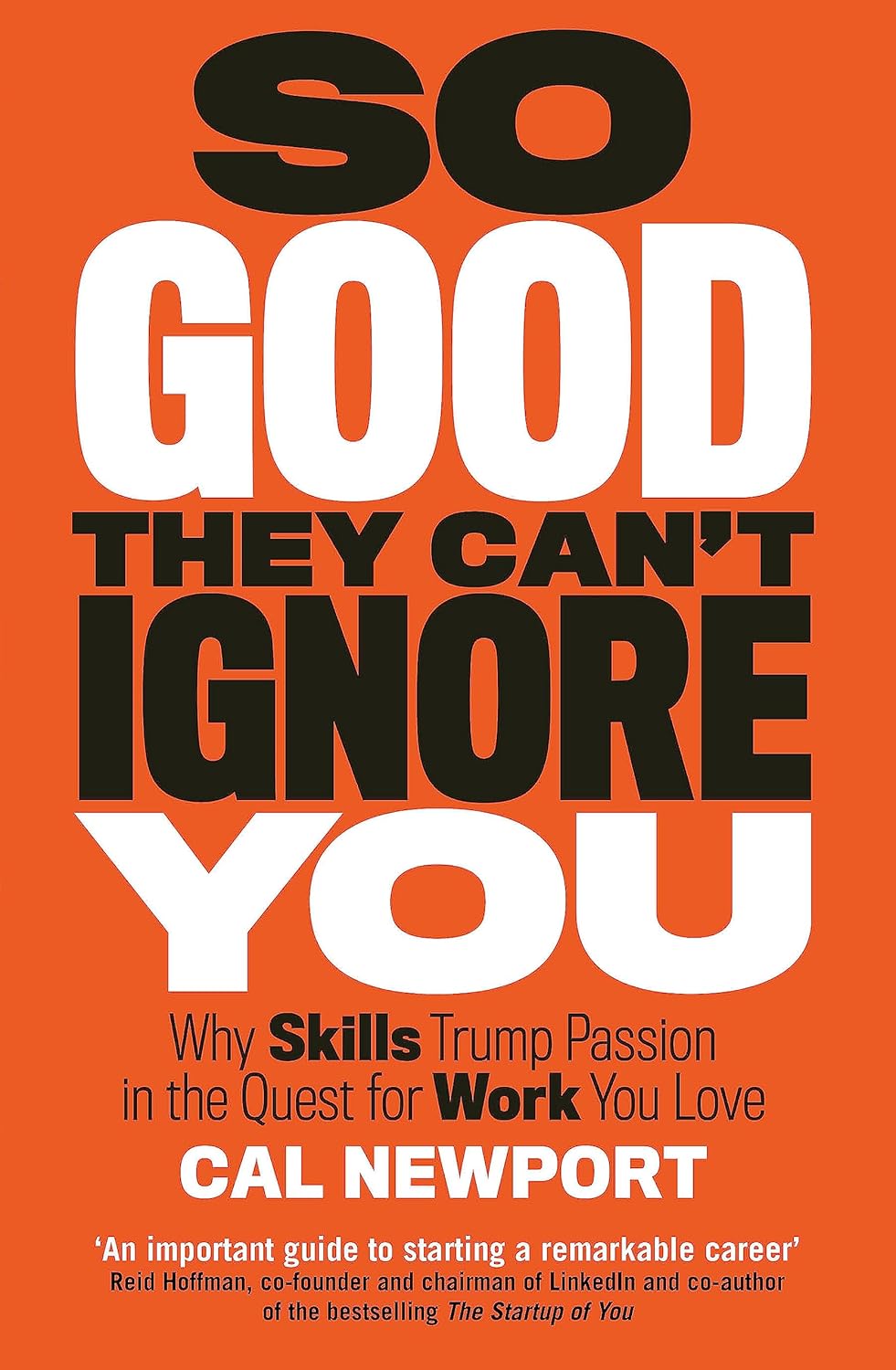
Newport's argument is simple and it changed my approach to building in public. Skill and evidence beat passion and self-promotion. I am not standing on a stage asking you to believe I can help you write a book. I am showing you the book being written. Chapter by chapter. Week by week. The work is the proof. Newport gave me the language for why that works.
Twenty-two years of military service did a number on my digestion. Field rations, irregular sleep, stress eating. These enzymes cut through the brain fog that used to stall my writing sessions. When I am deep in a chapter with Claude and need to think clearly, digestion matters more than people realize.
For the decade before retirement, I averaged 4 hours of sleep. Magnesium helped me rebuild my sleep rhythm. Building a book in public means early mornings and late nights. Recovery is not optional when the work is this demanding.
Karin Knecht moved from Stuttgart, Germany to London, England to Chicago, Illinois.
At each stop she rebuilt. New language. New culture. New way of proving herself. She did not wait for someone to hand her a playbook. She wrote her own.
Today she runs Dunamis Coaching and Consulting, helping expat leaders and multicultural teams unlock potential they did not know they were sitting on. She has over 20 years of experience coaching across industries, and she is fluent in English and German.
She is also a published author. Karin author her story in the Dare to Ignite Your Dreams anthology, tracing the journey from leaving Germany to building a life and a business on her own terms in the United States.
What I respect about Karin is that she does not just talk about the work. She does it. She showed up week after week inside the Memoirs to Millions community. She put in the reps. She finished the book.
That is the same thing I am doing with Zero right now. And it is the same thing available to anyone willing to show up and do the work.
Next Friday I am back with another look inside the build. And I am going to walk you through Replit, the tool I am using to build the Zero landing page from scratch. How it works. What the page looks like right now. And what it means to build the platform and the book at the same time.
Plus, the next chapter of Zero drops on LinkedIn on Monday.
If you are following this journey, you are watching a book get built in real time. And if you are ready to start building your own, the Memoirs to Millions community is where that work happens.
Share This Brief
Help others discover these tools by sharing on your favorite platform:
I've read and listened to over 900+ books. These are the ones worth your time.
Searchable, filterable, and organized so you find your next great read in seconds.