Watch Asher's quick intro to this week's tools, resources, and insights
Read More
This week I break down the exact move my mind makes when I read a book. I call it the Tree. It is how I take a big body of information and shrink it down to one thing small enough to carry.
Become an Author / Vendor
A book is the first thing that outlives you.
The Life-Changing Wisdom Marketplace is open. Bring what you lived. We help you publish it.
Someone asked me how I read.
I set a challenge for myself. A long one. A lot of books. And the question was simple. How do you read that much and actually keep what is inside?
My first answer was a list. I do this. I do that. I do this part consistently.
And in the middle of answering, I asked myself a different question. If I had to package all of this and hand it to you, what would it be?
That is when my mind took a different turn with the question. Because whatever I was doing, I had been doing it for so long that I had stopped watching it happen.
A system that works disappears. I ran mine so many times it turned into automation, and I stopped seeing it the way you stop hearing your own heartbeat. It ran on its own. I stopped listening a long time ago.
I asked a better question. What does my mind do? What does it reach for first when I open a book? Then what? Then what after that?
And there it was. Five moves. A system I had been running for years without a name on it.
The clearest way to show it to you is to let you see it as a tree.
This is the system I use to read a book and walk away with something I can carry. I pulled it apart so you can see the pieces and find your own. The moment you name yours, you can hand it to someone else.
What would you find if you pulled your system apart?
You have a pattern you have been running so long it went quiet. This tool pulls it back into view. Load your raw material, paste the prompt, and let it dig through what you keep doing, where the heat lives, and what you circle without naming. It surfaces the automation hiding under your habits.
TOOL #2: Trace Back (Recipe 13 Compass, Left Direction)
Once the system surfaces, you have the pattern. You do not yet have the origin. Trace Back takes one thing you do and follows it back with two questions until you reach the moment it began, the first time you ran the move before you had a name for it. A thing you built on purpose gets a name. A thing that assembled itself in the dark does not. This tool lights up the dark. It shows you what had to already be in place for you to be doing what you do today. Surface the pattern with the rig. Then trace it back.
A note on both tools: You can ask Claude to take either of these prompts and build it as a saved skill inside your workspace. Tell it: take this and make it a skill I can reuse. Claude will save the skill so you can run it on your own material, your own chapters, your own life, without pasting the prompt again. Build it once, use it as many times as you need.
Picture knowledge as a tree.
When you read a book, your mind is standing in front of a tree. A reader standing in front of it sees the tree as one green mass and walk away with a feeling. The move I am about to give you breaks the tree into five parts, so you walk away with something you can carry.
The leaves. S.P.A.M.
The leaves are the first thing you see. They catch the light. They are easy to spot because they are built to stick out. In a book, the leaves are the language that makes you stop and reach for a pen. I call them SPAMs.
S. Similes. A simile compares one thing to another using "like" or "as." You already read one in the opening of this brief: "I stopped seeing it the way you stop hearing your own heartbeat." That is a simile. It takes something invisible, an automated system running without your attention, and makes it physical by comparing it to a body function you forgot you were performing. You felt it because the comparison gave you something to feel.
P. Parables. A parable is a short story that carries a lesson. The opening of this brief is one. Someone asked me how I read. I started listing tactics. I caught myself mid-answer and found a system I had been running for years without a name. That short story carries the lesson: your best method goes invisible the moment it starts working. You remember the story. The lesson rides inside it.
A. Analogies. An analogy maps one system onto another. The framework you are learning right now is one. I took the structure of a real tree, leaves, branches, trunk, root, seed, and mapped it onto how you extract and carry knowledge from a book. The tree is not decoration. It is a working map: one system laid on top of another so you can think about reading using the logic of something that grows.
M. Metaphors. A metaphor says one thing IS another. It does not compare. It collapses. Earlier in this brief: "A thing that assembled itself in the dark." The system is not like darkness. The system IS the dark, running without light, until you trace it back and see the pieces. The metaphor forces your mind to hold two ideas as the same object.
When you spot a SPAM, write it down. You are collecting leaves. They are the most visible part of the tree and the easiest to gather, but they are not what holds the tree up.
The branches. The method.
Under the leaves are the branches that hold them up. The branches are the method. The how-to. The steps the author followed or teaches. Different branches carry you to different outcomes. When you spot the method, you can run it yourself.
The trunk. The thesis.
The branches all join one trunk. The trunk is the thesis. The single thing the book stands for, the claim the author is out to prove. It holds the whole tree upright. You can agree with it or push against it, but once you find it, you understand what the book is.
The root. The system.
Under the ground is the root. The root is the system. The structure that holds the whole tree up, the part you do not see unless you dig. The root is often the thing the author runs without naming, the same way you run yours. It is the automation underneath the argument.
The seed. The thing you carry.
The tree is too big to carry. You cannot take it with you. But you can take the seed. The seed is the system shrunk down to a capsule small enough to fit in your pocket. You take a big body of information and you reduce it to one portable thing. Then you plant it. In your own life. In someone else's. And if you feed it, it grows into a tree of its own, in new soil.
That is the move. Leaves, branches, trunk, root, seed. You read a tree. You leave with a seed.
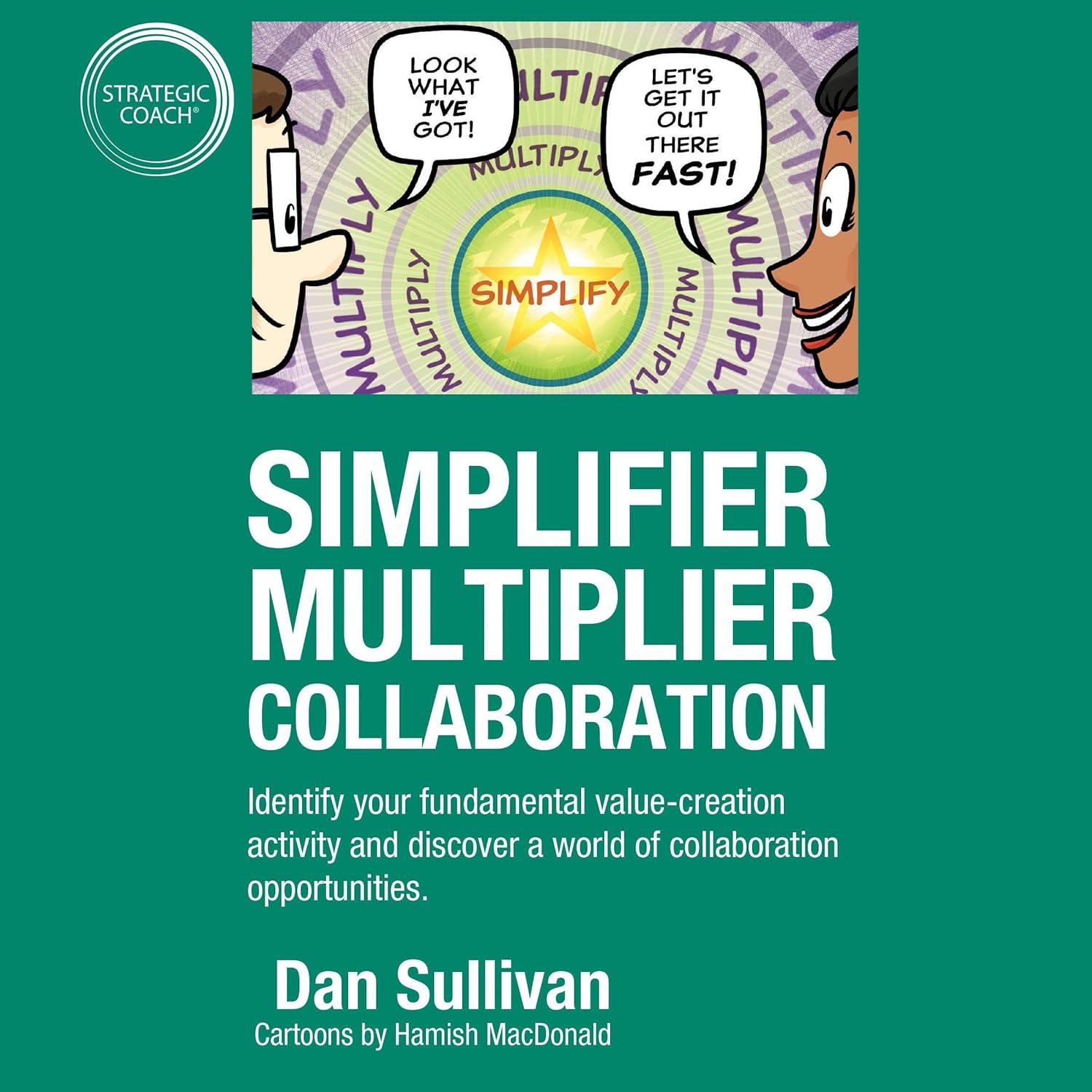
The worked example: Simplifier-Multiplier Collaboration by Dan Sullivan
Watch the Tree run on a real book.
Leaf: "Find your opposite." The line that sticks.
Branch: the method. Notice which work energizes you and which work drains you. One of them is your nature. Then partner with the person whose nature is the reverse.
Trunk: the thesis. Every entrepreneur is primarily a simplifier or a multiplier, and knowing which one you are deepens how you create value.
Root: the system underneath. Stop resisting complexity. Turn it into value instead. The skill compounds the more you run it.
Seed: the capsule I carried out. You do not fix your weak side. You name your strong side and find your opposite. Small enough to carry into a business, a marriage, a team, a writing partnership.
That is a whole book reduced to one seed. That is the Tree.
Two people can read the same book and walk away with two different things. One carries a feeling. The other carries a seed. The difference is what their mind learned to reach for. These two episodes show you what it looks like when someone stops reading books and starts reading their own life the same way, digging past the surface until they find what was holding it up.
PODCAST #1: Robert Caro on Power, Poverty, Ruthlessness, Obsession and Running
Featuring: Founders Podcast
Read More
Robert Caro has spent decades on two subjects. One biography of Robert Moses. Four volumes and counting on Lyndon Johnson. His mentor gave him one rule: turn every page. That rule became Caro's system. He ran it so deeply and so consistently that it disappeared into how he worked.
When you trace it back, you find the root. Caro had a painful childhood, a father who yelled, and the library was where he felt safe. He fell in love with digging through files the first night he did it and did not notice the sun come up. That is a system that assembled itself in the dark. He traced it back decades later and found the seed had been planted before he could name it. The same thing he discovered about himself, he discovered about Johnson: the story of the father is embedded in the son. The system you run today was planted by someone who came before you.
PODCAST #2: The Biography of James Cameron
Featuring: Founders Podcast
Read More
James Cameron was a truck driver who taught himself filmmaking by photocopying 300-page dissertations from a university library he could not afford to attend. He filled two binders with technical papers and gave himself a graduate education for about $120 in photocopies. That is the method, the branches of his tree. The trunk is the thesis he built his career on: do the thing that is hard, because the harder it is, the fewer people will follow you there. The root underneath: Cameron is wired to do things the hard way. He said it himself, "I am an explorer by nature and a filmmaker by trade." The seed he carried from that truck cab into a career spanning decades: if you teach yourself the thing few people will sit down and teach themselves, you become a one of one. He planted that seed in filmmaking, in ocean exploration, in technology. The soil changed. The seed did not.
Room 5 • What I'm Reading
Books of the Week
You have the tools. You've done the internal work. Now you need frameworks.
BOOK #1: Simplifier-Multiplier Collaboration
By: Dan Sullivan ⭐⭐⭐⭐⭐
Read More
This is the book I ran the Tree on in this week's Deep Work, so you have already seen its seed. Sullivan splits entrepreneurs into two natures. You simplify, or you multiply. One drains you, one lights you up. The book helps you name which one you are and then find your opposite, the collaborator who carries the half you do not. The root underneath is what I carried out of the book: stop resisting complexity and turn it into value, and the move gets stronger the more you run it. A short read with a seed worth planting.
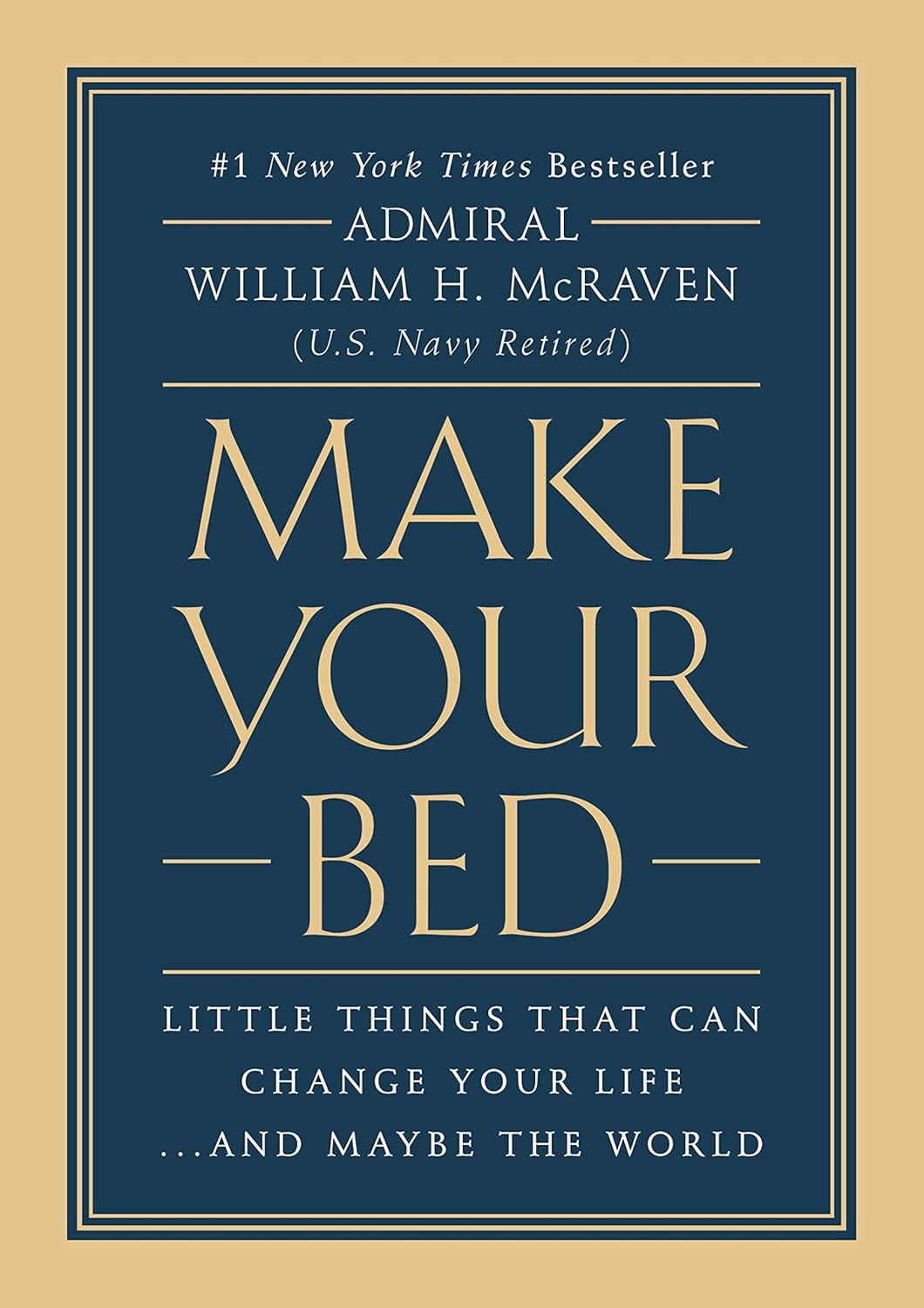
McRaven hands you the seed in the title. Make your bed. One small task, done first, done right. The branches are the ten lessons from Navy SEAL training. The trunk is the thesis: the small disciplines are the ones that carry the large ones. The root is the system underneath: how you do the small thing is how you do the rest. The seed you carry out: the first task, finished well. It sets the shape of the whole day. Proof that a seed does not need to be complicated to grow into a life.
The seed does not live in your head. It lives on the page. The SPAMs you catch, the method you spot, the thesis you push against, the root you dig for, and the seed you carry out, they land here first. Before the tree becomes a system you can teach, it is a collection of lines written down in real time while you read.
This is where the tree starts growing.
By the way, this one is UltraHyde hardcover. 80 lined cream pages. Ribbon page marker. Elastic closure. 5.5 x 8.5 inches.
You traced the system back. You found the pieces. You named a thing you had been running for years without seeing it.
This hat is distressed on purpose. Worn-in, broken-in, marked by use. So is the system you named. It has been running long enough to show its wear, and now you wear the proof that you went back and looked.
I went back for it. I wear what I found.
By the way, this one is 100% pre-shrunk cotton twill. Embroidered front patch. Hook-and-loop closure. One size. Black, Charcoal Grey, Khaki, Navy.
By the way. The system you traced back is the chapter your book is built on. You ran it for years without a name. Now you have the pieces, and the pieces are a story worth telling. The Life-Changing Wisdom Marketplace is live, and the first 250 spots close in less than ninety days. Bring the system you found. We will help you plant it in a book that carries your seed forward.
Share This Brief
Help others discover these tools by sharing on your favorite platform:
I've read and listened to over 900+ books. These are the ones worth your time.
Searchable, filterable, and organized so you find your next great read in seconds.