That is the sentence I keep coming back to this week. You are a body of memories. And a body of memories has something to say.
Your body is evidence of your existence. Your possessions are evidence of your time here. But the one piece of evidence that captures what it felt like to be you, the one that holds the meaning behind the body and the possessions, is your story. The way you make sense of what happened to you, the way you shape it, and the way you hand it to someone who needs to hear it.
The question is not whether you have material. You do. You have been collecting it since the day you arrived. The question is what direction you give it.
This week I listened to David Senra on the Founders podcast break down the stories of Tiger Woods and Walt Disney. Two men who took what was inside them and pointed it somewhere specific.
Tiger Woods picked up a golf club at eleven months old. His father built a training system around him before kindergarten. Tiger Woods carried the weight of expectation, pressure, and a complicated family. He pointed it at the golf course. Six hundred balls a day. The weight became the swing.
Walt Disney grew up under a father who was controlling and harsh. When Walt Disney was nine years old, his father put him on a newspaper delivery route in Kansas City, waking him before dawn every morning. He had nightmares about missing a customer on that route forty years later. He took that weight and pointed it at a canvas. Then a studio. Then a theme park. He built worlds he could control because the one he grew up in gave him minimal say.
Each one took their individual experience of reality and gave it a direction. The craft became the container. The weight became the work. Tiger Woods is still creating his. Walt Disney built his until the day he died. Both gave their weight a direction.
And you are creating yours.
Room 2 • Tools of the Week
The Tools That Changed Everything
TOOL #1: Recipe 13
Recipe 13 is a prompt you paste into Claude before your chapter. It runs your writing through 13 rules: ban list enforcement, negation stacking limits, parallel stacking limits, rhythm checks, scene transfer structure, and more. Each rule catches a specific pattern. Each pass gets you closer to the version that sounds like you.
Wispr Flow captures your voice and converts it to text in real time. Use it for Move 2 this week: get what is inside you out of your body and onto a surface where you can look at it. The point is not to write well. The point is to talk until the memory is outside of you.
I have been training myself to see the content I take in through the memoir lens. To find the principles inside the stories I encounter each day, strip them down, and shift them into the lane of memoir.
Walt Disney is not a business case study to me. Tiger Woods is not a sports story. They are examples of how a person takes what is inside and finds a place to put it.
When you look at the world through the memoir lens, you stop consuming and start converting. A podcast episode becomes a mirror. A biography becomes a recipe. A hard conversation becomes a chapter you have not written yet. You stop asking "what happened?" and start asking "what does this mean for my story?"
Your memoir is not something you sit down and write one day when you are ready. It is the lens you carry with you while you live. The material is already arriving. It arrived this morning. It arrived in the conversation you had yesterday. It arrived in the thing you keep thinking about but have not said out loud yet.
The evidence of reality is undefined until you define it. Your story is how you define it. Walt Disney defined his through animation and a theme park. Tiger Woods defined his through a golf swing. You get to define yours through the words you choose, the scenes you select, the meaning you assign to the memories you carry.
Who said reality has to stay undefined? If you are a body of memories and those memories are sitting inside you without a direction, then you are carrying weight without building something meaningful from it. The memoir is where the weight becomes the work. The page is where the undefined becomes defined.
You might be thinking: I am not Walt Disney. I am not Tiger Woods.
Good. Because the world that we live in right now, you do not need to be an outlier to get written about. You can write about yourself. And you should. Because if you have no record of being here, then you were not here.
You might never get a monument built of you. But you can leave a monumental story behind. The evidence of your existence, the part that gets passed on, the part that outlives the body and the possessions, is the story. That is what gets carried forward. That is what your grandchildren will hold. You are the memoir.
Walt Disney and Tiger Woods got written about because they were extreme. Their stories are useful because they show what it looks like when someone takes their weight and gives it a direction. But the principle underneath their stories is the same principle underneath yours. You carried something. You survived something. You learned something that only your specific experience could have taught you. And that experience has something to say.
A memoir is a part of your life that has something to teach. You use your story as a recipe for the reader's transformation. You are the lab. Your reader is the patient. Your chapters are the medicine.
The medicine is inside you. It has been sitting there. Your job this week is to get it out.
Three moves for this week:
Move 1: Pick one memory that shaped you.
One. The one you come back to. The one that changed how you see people, how you make decisions, how you show up. You do not need to understand why it stayed. You need to name it. Say it out loud. Write it down. It has been sitting inside you long enough.
Move 2: Give it a place to land.
Open your phone. Open a blank document. Talk. Let it arrive ugly. The point is not to write well. The point is to get it out of your body and onto a surface where you can look at it. Before you can shape it, it has to exist outside of you.
Move 3: Ask one question about it.
Look at what you wrote and ask: what did this teach me that I could hand to someone else? That question is the bridge between diary and memoir. A diary says this happened to me. A memoir says this happened to me and here is what it means for you. The question turns weight into medicine.
Tiger Woods is the Mozart of golf. Senra draws the parallel and it holds. Listen for what Tiger Woods taped to his bedroom wall as a child and the line at the end that changes the whole story: "I'm going to play for myself." That sentence is where your memoir should start.
PODCAST #2: The Biography of Walt Disney
Featuring: David Senra, Founders Podcast
Read More
Eight hundred pages distilled into one episode. Listen for the moment 14-year-old Walt Disney grabbed the hammer from his father's hand and held both his arms until his father cried. That is the moment he stopped living in someone else's world and started building his own. Your memoir has a moment like that too.
Room 5 • What I'm Reading
Books of the Week
You have the tools. You've done the internal work. Now you need frameworks.
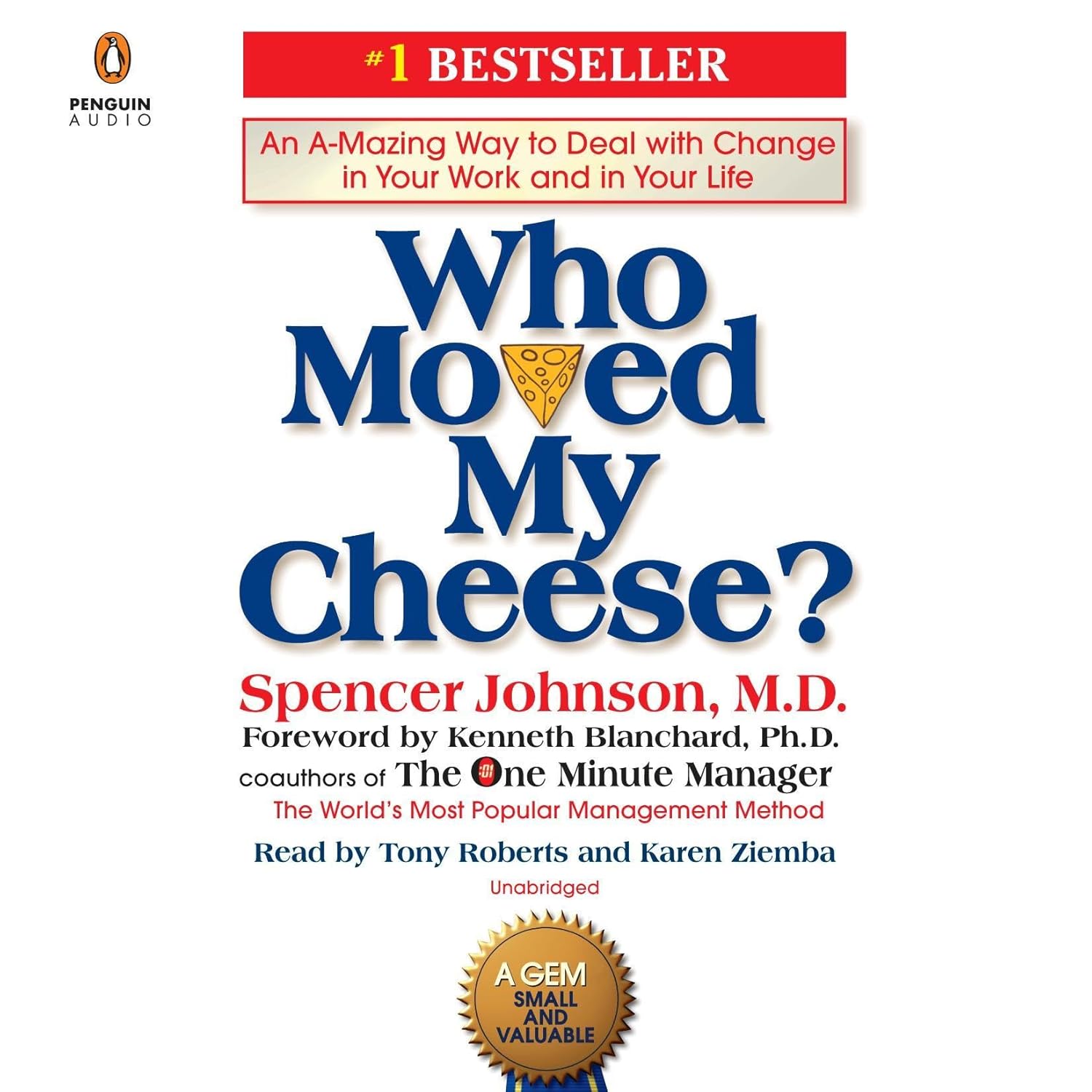
BOOK #1: Who Moved My Cheese?
By: Spencer Johnson ⭐⭐⭐⭐⭐
Read More
Short enough to finish in an hour. The whole book is about what you do when your reality shifts. The cheese moves. You either stay where you are or you move and find new cheese. Your memoir is the story of how you moved when the cheese moved. That is the chapter worth writing.
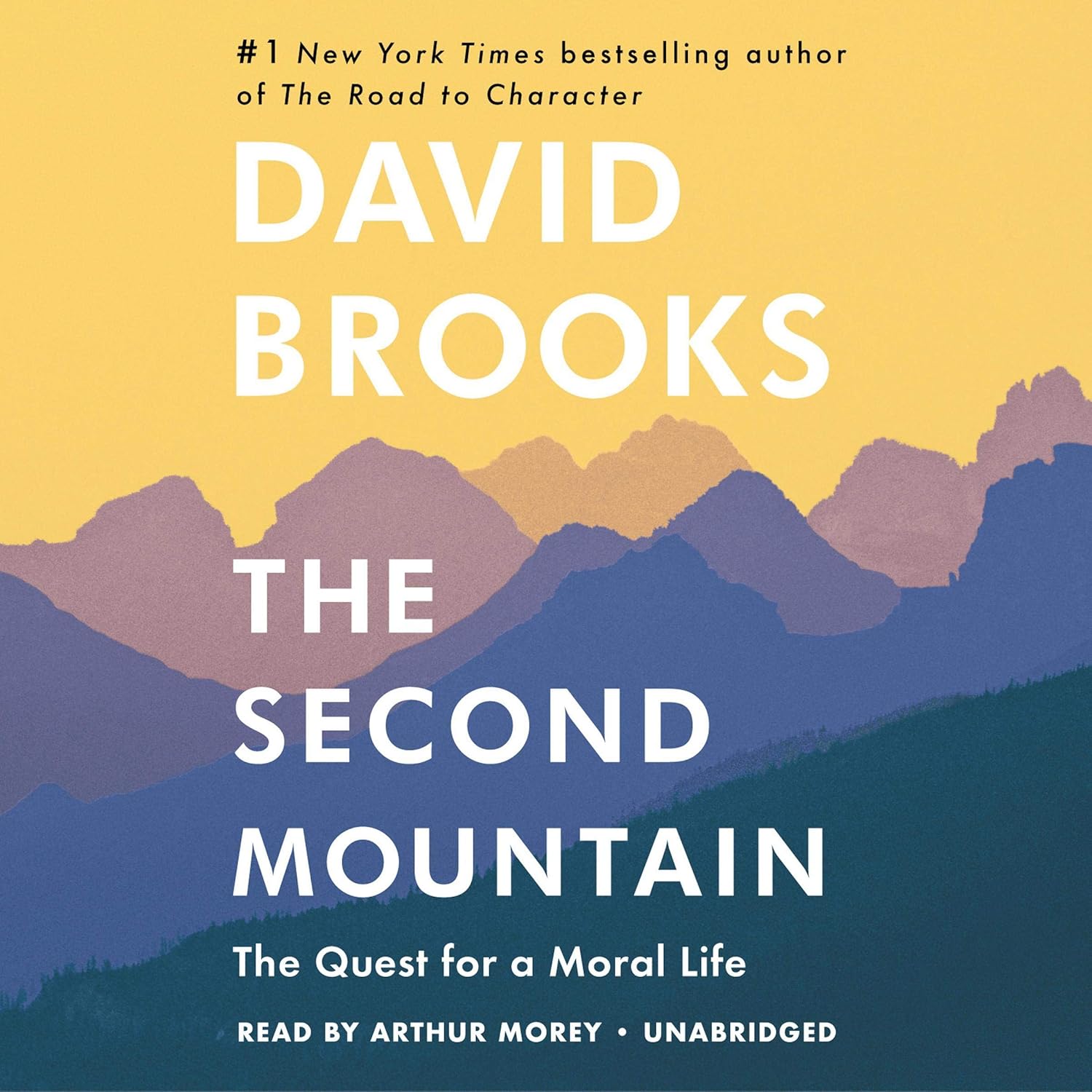
Brooks says there are two mountains in life. The first mountain is about building yourself up. Career, status, achievement. The second mountain is about giving yourself away. Commitment, community, purpose. Your memoir lives on the second mountain. It is where you take what you learned climbing the first one and hand it to someone else. That is the recipe.
PRODUCT #1: Isotonix Digestive Enzymes with Probiotics
Read More
When you are sitting with heavy material, your body needs support. I take these before meals to keep the engine running clean. The work of writing a memoir is physical, not just mental. Your gut is processing more than food when you are sitting with a chapter that asks something of you.
Sleep is where the subconscious does its editing. I take this before bed. The chapters that land hardest are the ones that arrive after rest, not after grinding. Magnesium keeps the sleep deep so the mind can do its work.
Another look inside the build.
The next chapter of Zero drops on LinkedIn. If you are following this journey, you are watching a book get built in real time. And if you are ready to start building your own, the Memoirs to Millions community is where that work happens.
Share This Brief
Help others discover these tools by sharing on your favorite platform:
I've read and listened to over 900+ books. These are the ones worth your time.
Searchable, filterable, and organized so you find your next great read in seconds.