You have lived through something worth writing about. You already know that. You would not be reading this if you did not.
The question is not whether your story matters. You settled that a long time ago. The question this week is where you go when you sit down to write it.
Charlie Munger, Warren Buffett's business partner for over fifty years, used to say: "All I want to know is where I'm going to die so I'll never go there."
He was talking about money. But the principle works for writing too. Figure out where your chapter goes to die. Stop going there.
If you are a veteran, the room that kills your chapter is the conversation where someone tells you to write about combat when your real chapter is about the silence that followed you home. You keep trying to write the chapter they want. The one you need to write keeps waiting.
If you are an immigrant, the room that kills your chapter is the dinner table where your mother asks why you are writing about the old country when the point of leaving was to move forward. You close the laptop because the guilt is louder than the sentence you were working on.
If you are an entrepreneur, the room that kills your chapter is the advisor who says a book is a vanity project. You hear that sentence and the draft stays closed for another week.
Those rooms will drain your chapter before you finish the paragraph.
There is another room.
It is the one where you wrote something at 11 p.m. and read it back and thought: that is what I have been trying to say for two years. The room where the draft is messy and incomplete and yours. The room where the cursor blinks and you sit down and the world outside goes quiet.
That room is still open.
Thursday, Issue #19 went live on LinkedIn. It is about writing Chapter 13 of Zero, called Windows. The biggest thing I learned from writing it: your first draft is not supposed to be good. It is supposed to exist. Read it after you finish this Brief.
Room 2 • Tools of the Week
The Tools That Changed Everything
TOOL #1: Recipe 13: The Line Edit Prompt
AI will not give you its best writing until you teach it how you write. Recipe 13 is the guardrail. Paste it into Claude before you paste your chapter. I use Opus 4.6 for writing work. It produces stronger rhythm than 4.7 right now.
Recipe 13 checks your writing paragraph by paragraph against twelve rules. Run it line by line. Keep enforcing it until the AI starts producing work that sounds like you. Add your own rules as you discover your own patterns. This is how you train the tool to serve your voice.
This newsletter is my evidence. I run my own writing through Recipe 13 before it reaches your inbox. The guardrail is how the writing gets sharper.
This week's arc is Anchor. The chapter where something held you steady during a season when your life was shaking. The anchor did not fix you. The anchor stayed.
The question Anchor asks: What held you when nothing else could?
The habit of returning to the draft is the anchor. The routine you build around your writing. The Tuesday night after the kids are asleep. The 5 a.m. hour before work. The practice of showing up. That practice holds you when the rest of your life moves on.
You are running a startup and you do not know it.
Your memoir is the company. Your chapters are the product. Your readers are the customers who have not found you yet. And right now, the company is in its hardest season. The one where the team has stopped believing.
The team is the people around you. The friend who used to ask about the book and stopped. The follower who engaged with your posts for six months and went quiet. The family member who changed the subject the last time you brought it up. The voice in your own head that says: who is going to read this?
That voice is the room where your chapter goes to die.
Here is what you do. You build a habit. You remove the decision of whether to write. You sit down at the same time, in the same place, and you open the draft. The habit removes the negotiation. You are not deciding if you feel like writing. You are writing because it is Tuesday and on Tuesdays you write.
The thing that made you different as a kid is the thing that makes you valuable as a writer. The story you carry that feels too specific, too personal, too tangled with people who might read it and feel something you cannot control. That story is the one someone else needs to read. Your memoir is not competing with other memoirs. It is the one book that carries your specific experience. You are not trying to be the best. You are trying to be the one who wrote it.
Open the draft. Start typing. The clarity comes from the action. You do not wait until you know what to say. You write until you find it. The writing is the thinking. The draft is the room where your mind does work it cannot do in your head.
There is a founder who built a software company over ten years. Half his team left during the hardest season. People stopped believing. He could see it in their eyes. Inside that same building, one room was different. A small team was building something that worked. The energy in that room was the opposite of the hallway outside. He kept walking into that room. Dark hallway. Electric room. Dark hallway. Electric room.
They shipped the product broken. First day: one million dollars in revenue. The breakthrough was built in the room that believed.
Your draft is that room.
The cost of leaving it is simple. The chapter stays in drafts. The book stays in your head. The message you have been carrying stays unnamed. The people who need your story keep searching for someone who sounds like you and cannot find you because you stopped showing up.
Go where they love you. The page loves you back.
PODCAST #1: Excellent Advice for Living: 79 Maxims from a Wise Old Man
Featured: Kevin Kelly - Founders Podcast
Read More
Kevin Kelly co-founded Wired magazine and served as its founding executive editor. On his 68th birthday, he started writing down pieces of advice and sharing them with his family. He kept going until he had 450 maxims. He published them in a book called Excellent Advice for Living. This episode walks through the ones that hit hardest. "The purpose of a habit is to remove that action from self-negotiation." "The thing that made you weird as a kid could make you great as an adult if you don't lose it." "Don't be the best. Be the only." If you are writing a memoir right now, this episode will give you language for what you are doing and why it matters.
PODCAST #2: How Replit Agent Made $1M on Day One (Then $250M in a Year)
Featured: Amjad Masad - My First Million
Read More
Amjad Masad built a software company called Replit over ten years. The company came close to dying. Half the team left. One room in the office was building something electric while the rest of the building went dark. They shipped the product broken and it made a million dollars on day one. The part that landed hardest for me: when he describes the feeling of walking into the office and knowing someone is about to quit. If you have been carrying a project that the people around you have stopped believing in, this conversation will feel familiar.
Room 5 • What I'm Reading
Books of the Week
You have the tools. You've done the internal work. Now you need frameworks.
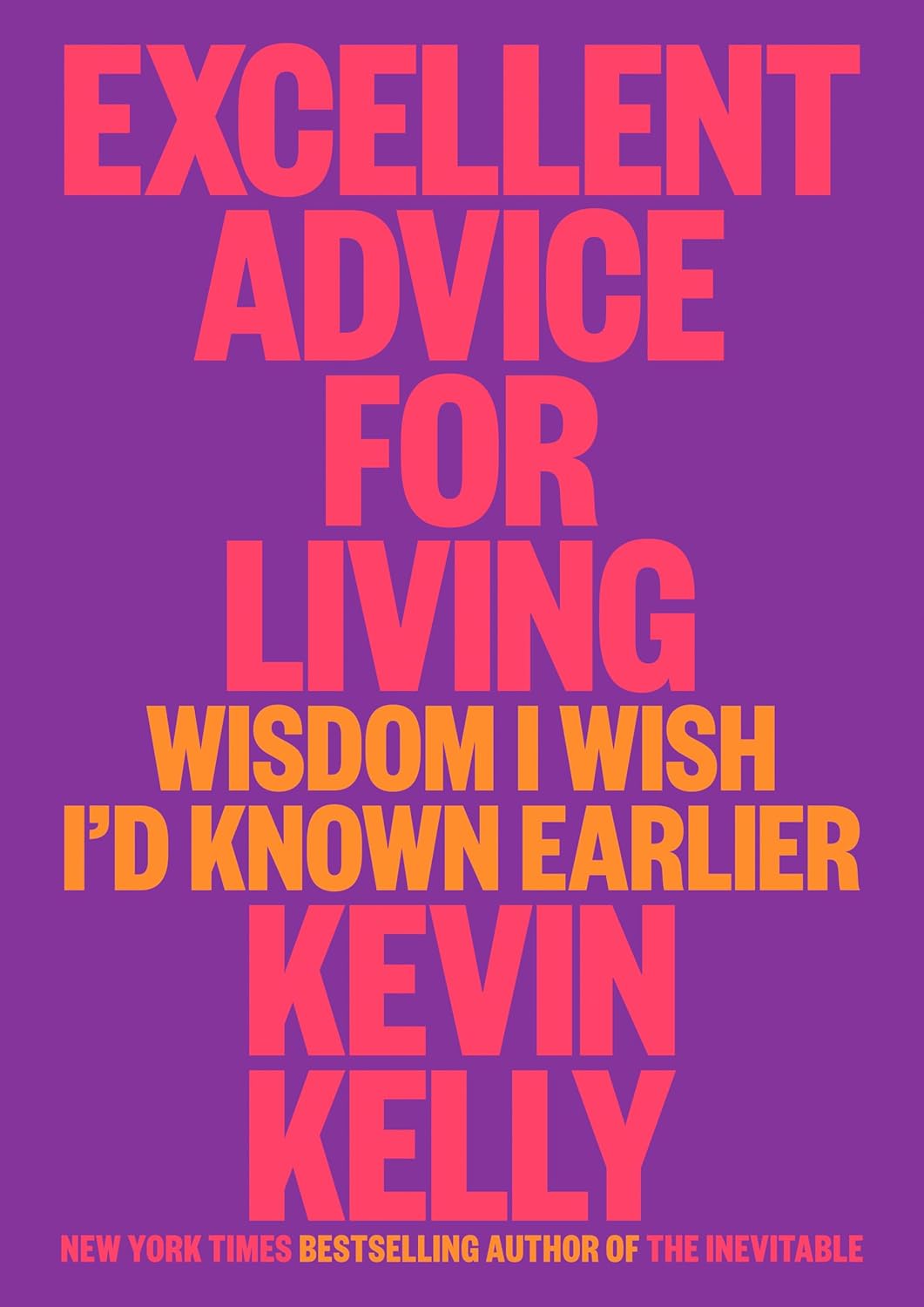
BOOK #1: Excellent Advice for Living: Wisdom I Wish I'd Known Earlier
By: Kevin Kelly ⭐⭐⭐⭐⭐
Read More
450 maxims. Each one is a seed. Each one could expand into an essay. The book reads fast. The ideas stay. "Separate the process of creating from improving. You can't write and edit at the same time." If you are writing a memoir, keep this book next to your laptop.
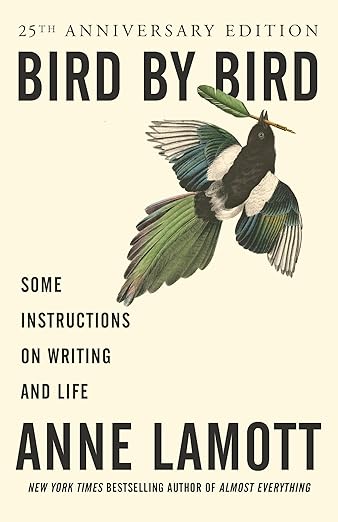
BOOK #2: Bird by Bird: Some Instructions on Writing and Life
By: Anne Lamott ⭐⭐⭐⭐⭐
Read More
The title comes from a story about her older brother. He was ten years old with a school report due on birds. He had three months. He waited until the last day. Their father sat down next to him at the kitchen table and said: "Bird by bird, buddy. Take it bird by bird." The book is about writing one paragraph at a time when the project feels too big to finish. It is honest about resistance, about family judgment, about the hours when the draft feels pointless. If you have been staring at a blank page and wondering if the work is worth it, this book will sit down next to you and say: keep going.
PRODUCT #1: Isotonix Digestive Enzymes with Probiotics
Read More
When you sit with your chapter for hours, the body shows up before the mind does. Brain fog. Gut tension. The heaviness that arrives before a word hits the page. These enzymes support the clarity you need to stay in the room long enough to do the work.
The writing hours are nervous-system hours. If your sleep breaks down, the next morning's writing comes out flat. Magnesium rebuilt my sleep enough to wake up with something to say. This is the supplement that helped me stay in the chair on the days the chair felt impossible.
Next Friday another look inside the build. Monday the next chapter of Zero drops on LinkedIn.
If you are following this journey, you are watching a book get built in real time. And if you are ready to start building your own, the Memoirs to Millions community is where that work happens.
Share This Brief
Help others discover these tools by sharing on your favorite platform:
I've read and listened to over 900+ books. These are the ones worth your time.
Searchable, filterable, and organized so you find your next great read in seconds.