Watch Asher's quick intro to this week's tools, resources, and insights
Read More
This week I sat down with Dr. Ankit from Breaking Mental Models. He teaches people how to escape the cognitive traps that keep them stuck in old versions of themselves. We talked about something he calls the hindsight trap: the loop of living in the past and blaming yourself for what you did with the information you had at the time. He used a metaphor I have been thinking about since. A bowl of water will not become ice because you tell it to. It becomes ice because you change the environment around it and give it time. The environment is what changes the state. The Brief you are about to read is about changing your environment from resume-mode to message-mode. Watch the conversation first. Then read.
Become an Author / Vendor
A book is the first thing that outlives you.
The Life-Changing Wisdom Marketplace is open. Bring what you lived. We help you publish it.
Imagine it is Wednesday night. You are in bed. The house is quiet. Your phone is in your hand and you are scrolling through your own feed.
You see a post you wrote about your kid last month, the one where you described their face when they asked you something you did not know how to answer. Below it, the one about your mother from the fall. Then the one about a meeting at work that left you sitting in the parking lot for twenty minutes before you drove home.
On the surface, the posts look like they belong to three different people.
But there is something underneath those three posts you have not seen yet.
Start with the one about your mother. You wrote it on a Tuesday morning. You had been thinking about her voice. The way she said your name when she was disappointed. The sentence she repeated at the table when you were young, the one that made the room go still. You wrote 400 words in twelve minutes and then closed the app and went to work.
That post got more replies than your last twenty posts combined. You still do not know why.
You do know this: it was harder to write than the other two. You almost deleted it twice before you posted it. You kept wondering if she would see it. If she would call and ask what you meant. Or if she is gone, you kept wondering what she would have said. If someone in the family would read it and say, why would you put that out there.
You posted it anyway. And the response surprised you.
The replies were not from people who knew your mother. They were from people who recognized their own. The sentence your mother said at the table, they had heard a version of it in their own kitchen, from their own family, in their own childhood.
That is the subject you keep circling back to. The thing you write about in different costumes and have not named yet.
That thing is the hobby.
You might think your hobby is painting or running or building an engine. Those are the surface. On a deeper level, your hobby is the message. The thing you bring attention to because something inside you will not let it rest.
And the reason you have not named it yet is because naming it means your mother might read it. Your sister might call. The family might see what you have been carrying in silence.
That is why the feed stays scattered. The safe posts are easy. The real ones cost something.
If you cannot name that thing right now, that is data. It means the resume has been writing your story for a long time. But it also means the hard chapter has been writing itself inside you, and you have been keeping it in drafts.
Monday, Issue #18 of Zero went live on LinkedIn. It is called Ground. I wrote it about what happens when you walk through your own house with your eyes open for the first time. It walks you through four rooms of the self. The kitchen. The bathroom. The bedroom. The living room.
This Brief is about the part of your house you keep walking into when the rest of it is asleep. The part where the message lives. The part where the truth about the people who shaped you waits to be written.
That part of the house is where the original you still lives.
Room 2 • Tools of the Week
The Tools That Changed Everything
TOOL #1: Recipe 13: The Line Edit Prompt
This is the editing prompt I use on my own chapters. Paste it into Claude. I use Opus 4.6 for writing work. It produces stronger rhythm than 4.7 right now. Then paste your chapter below it. Recipe 13 checks your writing paragraph by paragraph against twelve rules: absolutes, negation stacking, parallel structures, catalog limits, and more. It catches what your eyes miss after the third read-through.
This week's arc is Epiphany. The chapter where confusion that lasted for years broke open in a single moment.
The question Epiphany asks: What confusion finally broke open?
The confusion: your feed looks scattered and you do not know why. The break-open moment: your scattered feed has a subject underneath it. You have been writing about the same thing in different costumes for years. The epiphany is seeing it for the first time.
Most memoir coaches help people document their career. I help people document the part of themselves the career hid.
Your message is the one you keep coming back to in your own feed. The subject that shows up between the updates, the reposts, and the photos from the weekend. A person's ordinary experience holds meaning other people need to hear. You have been circling that subject for years. The day you name it is the day the body of work begins.
Think about why you do your hobby.
Not the surface answer. Go deeper.
You do it because it gives you energy when the rest of your day takes energy away. You do it because when you are in the middle of it, you feel centered in a way that the office, the commute, and the calendar cannot touch.
Most people call the hobby leisure. Background noise between the real work. But noise fades when the day is over. The hobby stays. It keeps showing up when your day settles down. That is signal. The clearest one your life is sending you.
The thing that gives you energy is pointing at your natural ability. The thing that centers you is telling you what your work is supposed to be.
And if you love your day job too, ask yourself which one you would keep if you could choose one. The one you would keep is the signal.
You have been reading the hobby as a break from real life. The hobby is the most real part of your day. The job is what you do to pay for the space to do it.
Two women proved what happens when you stop treating the signal as a side project.
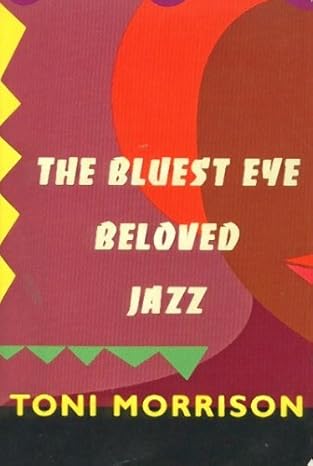
Toni Morrison became the first Black woman to win the Nobel Prize in Literature. Before that happened, she edited other writers' manuscripts at Random House during the day. She raised two sons on her own. She wrote at 4 a.m. before the house woke up. She had a subject she kept returning to: the interior lives of Black women in America. The day she stopped treating those pages as a side project was the day The Bluest Eye was born. Then Beloved. Then the Nobel Prize.
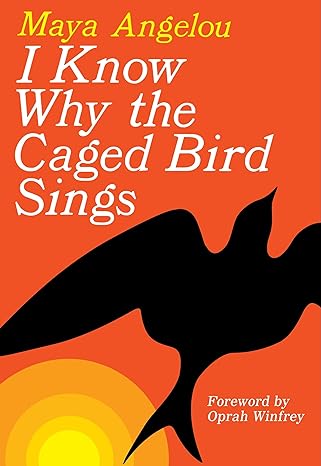
Maya Angelou wrote I Know Why the Caged Bird Sings, one of the most read memoirs of the twentieth century. Before that book existed, she worked as a fry cook and a streetcar conductor in San Francisco. She kept returning to language. Memorizing poetry. Journaling on buses. The words followed her from job to job, city to city, decade to decade. She once said: "There is no greater agony than bearing an untold story inside you."
Each of them had a hobby the world told them was not a career. Each of them named it anyway.
Now think about the last time you watched someone do your hobby on a screen.
You were on YouTube or Instagram or TikTok. Someone was doing the same thing you do. Baking bread. Restoring furniture. Running a trail.
And you watched for twenty minutes.
You watched because they knew something you wanted to know. A technique. A shortcut. A way of doing the thing that you had not figured out yet. In those twenty minutes, they saved you months.
Now flip it.
Someone out there started your hobby last month. You started it years ago. The gap between where they are and where you are is filled with lessons you learned the hard way.
That gap has a name. It is called expertise. And expertise is what people pay for.
You are not selling the hobby. You are selling the years of shortcuts someone else has not lived yet.
People spend money on their hobbies. They buy the tools, pay for classes, and watch tutorials for hours. That market has been in front of you for years.
The question is whether you will keep doing the hobby in private or start doing it in public where the people behind you can find you. And if you write it down, the chapter becomes the proof. The book becomes the credential. The teaching becomes the business.
And if the message stays unnamed?
If you keep the message scattered, the people who need it will keep almost finding you. They will read one post that lands, come back to your feed looking for more, and leave because they cannot find the thread.
Maya Angelou said it. "There is no greater agony than bearing an untold story inside you." The message is part of that story. The hobby is part of that message. Leaving it scattered is a slow way of bearing it.
Your hobby is not a break from your life. Your hobby is the part of your life the resume left out. And the chapter you write about it is the first step toward turning the thing you love into the thing that serves other people.
David Senra has read over 400 biographies of history's greatest founders and turned them into a podcast called Founders. This episode is about Larry Ellison, co-founder of Oracle, the software company behind the databases that run hospitals, banks, and governments. Ellison spent his free time obsessing over yacht racing, Japanese architecture, and history. Sailing taught him competition. Japanese aesthetics taught him simplicity. History taught him pattern recognition. His hobby was his work before the world gave it a job title. If you want to hear what it sounds like when the message shows up in the hobby, start here.
PODCAST #2: The Stubborn Genius of James Dyson
Featured: David Senra - Founders Podcast
Read More
James Dyson is the engineer behind the Dyson vacuum cleaner. If you have seen the bladeless fan or the cordless vacuum that looks like it belongs in a science fiction film, that is his company. He ran sand dunes alone as a teenager while his competitors trained on the track. He built 5,127 prototypes over 14 years before one worked. His autobiography is called Against the Odds and it reads like an Obsession arc from start to finish. David Senra calls it his number one book recommendation.
Room 5 • What I'm Reading
Books of the Week
You have the tools. You've done the internal work. Now you need frameworks.
BOOK #1: I Know Why the Caged Bird Sings
By: Maya Angelou ⭐⭐⭐⭐⭐
Read More
A memoir that starts in a small town in Arkansas and follows a young girl through poverty, racism, and silence. The writing is plain and direct. The pain is specific. And the hobby that produced it, returning to language through decades of unrelated jobs, is the thesis of this Brief in book form.
Morrison's debut novel. Written on scraps of paper at 4 a.m. while her sons slept. A story about a young girl who wants blue eyes because the world told her that her own were wrong. The side project that started a Nobel Prize career. Published when Morrison was 39.
PRODUCT #1: Isotonix Digestive Enzymes with Probiotics
Read More
When you sit with your message for hours, the body shows up before the mind does. Brain fog. Gut tension. The heaviness that arrives before a word hits the page. These enzymes support the clarity you need to stay in the room long enough to do the work.
The writing hours are nervous-system hours. If you sleep poorly, the next morning's writing comes out flat. Magnesium rebuilt my sleep enough to wake up with something to say. This is the supplement that helped me stay in the chair on the days the chair felt impossible.
Next Friday another look inside the build. Monday the next chapter of Zero drops on LinkedIn.
If you are following this journey, you are watching a book get built in real time. And if you are ready to start building your own, the Memoirs to Millions community is where that work happens.
Share This Brief
Help others discover these tools by sharing on your favorite platform:
I've read and listened to over 900+ books. These are the ones worth your time.
Searchable, filterable, and organized so you find your next great read in seconds.