Watch Asher's quick intro to this week's tools, resources, and insights
Read More
This week Tiara Joseph sat down with me on the Memoirs to Millions Podcast. She used the phrase "spiritually homeless" and I have been turning it over in my mind ever since. A retired Army Captain, a woman of service, and a writer with a voice the world needs to hear. The conversation we had lives in the exact space this week's Brief is about. The middle. The place where yesterday and future meet, and where your memoir gets written.
Become an Author / Vendor
A book is the first thing that outlives you.
The Life-Changing Wisdom Marketplace is open. Bring what you lived. We help you publish it.
The paragraph on your laptop has not moved since Sunday. Same cursor. Same opening line. Your mind, meanwhile, is somewhere else entirely.
You are standing at the kitchen counter. Steam rising from the mug. Your phone has a message from three days ago that you have not answered. The chapter is open. The paragraph is stuck.
That paragraph is where the distance lives.
Your mind is elsewhere. You are picturing a summer in 2011 when things felt lighter. Or you are picturing a version of yourself twelve months from now, finished book in hand, the hard parts behind you.
Both of those places are lovely. Both of those places are elsewhere.
But they are not the same kind of elsewhere.
There is a word. Yester. It means the one immediately before this one. Yesternight. Yestereve. A small old word for the thing at your back. You fall toward Future with open arms. You fall away from Yester trying to protect yourself.
Future is clean. It has not happened yet. You can edit it in your head all day long. You can make it anything you want. Delete the boring parts before they arrive. Solve the hard parts offscreen. Future is a love affair with something that has no receipts.
Yester is heavy. Yester already happened. Yester has receipts. Yester cannot be edited in fact. Yester refuses to let you rewrite what it actually was.
That is why Future feels like love and Yester feels like weight.
But here is what you might have missed.
The meaning of yesterday is the most editable thing in your life. Your memoir is the editing room.
Monday, Issue #17 of Zero went live on LinkedIn. It is called Tenant. It is about me. About being afraid of a room in my own house. The bedroom. For over a decade. A therapist asked me once, are you afraid of going to sleep? That chapter is yesterday refusing to be loved. Read it after you finish this Brief and you will feel what this week's writing is asking of you.
Room 2 • Tools of the Week
The Tools That Changed Everything
TOOL #1: Claude by Anthropic
Anthropic recently launched Opus 4.7, and the jump in quality matters for memoir work. Paste your stuck paragraph into Claude and ask: what meaning am I currently assigning to this event? What other meanings might be true? That single question is the editing room opening its door.
TOOL #2: The framework that tells you what kind of meaning your chapter is carrying.
This week's arc is Epiphany. The moment the meaning of yesterday shifted in your hands. Same event. Same receipts. New meaning. That shift IS the editing you came here to do.
The Editing Room
Sit with that for a moment.
Your old boss fired you. That is the event. Fixed. Cannot be touched. The day you walked away from the career you thought was yours. Also fixed. Cannot be touched.
But the meaning? The meaning has been shifting inside you for years. At 25 the firing meant you failed. At 35 it meant you were protected from the wrong path. At 45 it meant that was the door that led you here. Same event. Three meanings. All written by the same pen, inside your own head, under your own authorship.
You have been rewriting yesterday your whole life. You just have not been doing it on the page.
The first few times you try to do this on the page, it will feel terrible. You will write three sentences and hate them. That is the sign you are in the right room. The easy version of this work stays inside your head. The hard version is the one that changes you.
Now imagine a scale. On one end sits Future. On the other end sits yesterday. Picture where your attention lives most days. For most of us, the scale tilts hard in one direction. Something like 90% in yesterday and 10% in Future. Replaying conversations. Re-litigating the same failures. Hearing the voices of people who left. Yesterday is doing most of the influencing, and your Future is not big enough to pull you out of it.
Your memoir is how you redistribute the ratio. You process yesterday on the page so it stops taking up so much real estate. The more you write, the more room you make for Future.
This is why memoirists do the work. The hardest love affair in writing is learning to love yesterday with the same devotion you give to Future.
If Future is a 10% project and yesterday is a 90% reality, you cannot afford to hate the 90%.
Your memoir does not ask you to go somewhere new. It asks you to love the place you already live.
You are not being asked to change your location. You are being asked to change your relationship with the location you never left.
Falling in love with yesterday is how you fall in love with yourself.
Because you ARE yesterday.
Yesterday is the only evidence that you exist.
Your memoir is where that evidence gets honored, revised, and transformed into something you can finally carry with pride.
Sometimes the meaning shift comes from a book. Sometimes from silence. Sometimes it comes from a sentence a friend says in passing. Dr. Renesha Nichols gave me one of those sentences.
My friend Dr. Renesha Nichols was at a college doing some work. I asked her, are you teaching or going to school there? She smiled and said, I have a doctorate. I am here teaching.
I thought: is a doctorate the highest degree?
A thought landed. Although a PhD and a GED are different, the highest degree a person can ever attain is the same.
To be valued. To feel valued. To give value.
You cannot be valued in Future alone. Future is too clean. Future has no weight. Being valued requires something that actually happened. And the thing that actually happened is yesterday.
If the name Dr. Renesha Nichols sounds familiar, that is because I spotlighted her in Brief #2. Go back and read that one. She belongs in this conversation too.
Here is the distinction you need for the writing.
Yester is the territory. Yesterday is the address.
You cannot love Yester in the abstract. You can only love yesterday in the specific. The Tuesday morning in 2011. The kitchen you were standing in when the phone rang. The exact sentence your father said before he walked out. The paragraph you cannot finish on your laptop right now.
Yester is what you are afraid of. Yesterday is where you find yourself once the fear breaks.
When the reader feels this shift happen inside your chapter, they start doing the same work on their own yesterday. That is when the memoir stops being yours and becomes theirs. That is when the story leaves the laptop and starts living in somebody else's kitchen.
The person who has done this work sleeps differently. They parent differently. They walk into rooms without the old conversations still playing in their head. They are not free from their past. They have made peace with the 90% that was there the whole time. That is what the editing room gives you if you show up long enough to use it.
The chair beside you is empty. A version of yourself from yesterday is waiting to sit down and be seen for the first time.
Pull up the chair. Turn on the computer. Start editing.
PODCAST #1: Claude's New Hidden AI Tool Feels Illegal
Featured: Varun Mayya on Claude Design
Read More
Anthropic recently dropped Claude Design. This video walks through how a person with zero design skills built a full brand identity, a pitch deck, and a launch video in under 20 minutes. For the memoirist, the design gap has closed. Your book cover, your author website, and your launch materials can be built by the same tool writing your chapters.
PODCAST #2: Google Gemini's New Features Are Mind Blowing (Flow Music & More)
Featured: Rob The Ai Guy
Read More
Google released Flow Music, a new Gemini desktop app, and updates to NotebookLM that matter if you are using it for developmental editing. Watch the NotebookLM section especially. The cover upload feature alone is worth the time.
Room 5 • What I'm Reading
Books of the Week
You have the tools. You've done the internal work. Now you need frameworks.
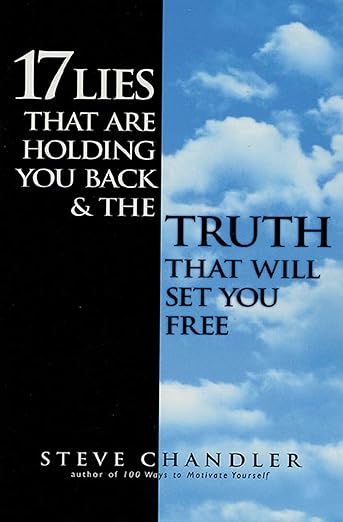
BOOK #1: 17 Lies That Are Holding You Back and the Truth That Will Set You Free
By: Steve Chandler ⭐⭐⭐⭐⭐
Read More
The sentences you repeat inside your head are the distance. "I am too old to write this." "I will start when the kids are grown." "My story is not that interesting." These are Yester and Future wearing different masks. Chandler names 17 of these lies by name and hands you the truth that collapses each one. This is the book that takes the whisper out of your ear and puts it on the page where you can finally see it for what it is.
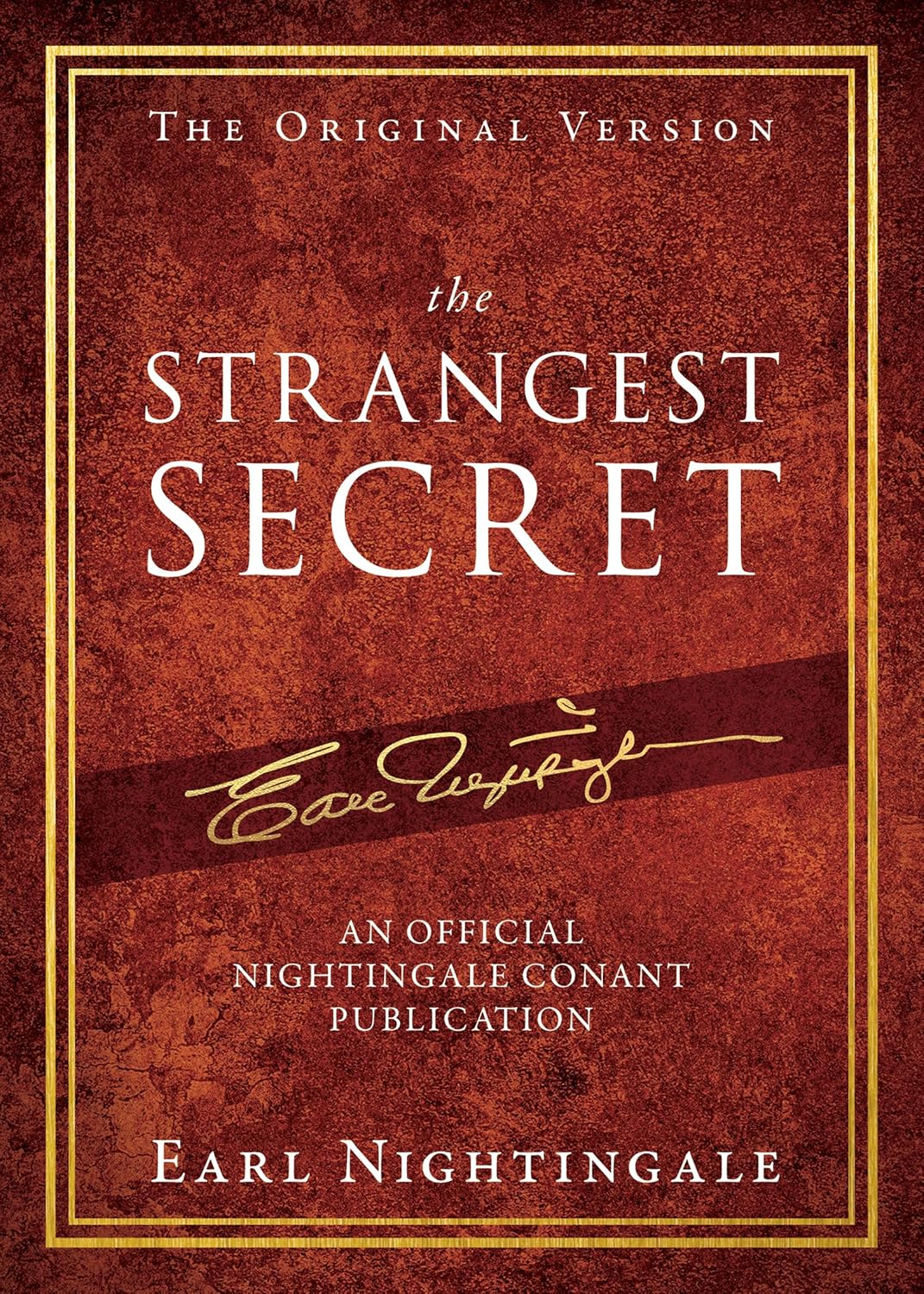
Nightingale recorded this in 1956 and sold over a million copies on vinyl. The secret is one line: we become what we think about. If you spend 90% of your thoughts inside yesterday, replaying the same conversations, you become yesterday. If you learn to edit the meaning of yesterday on the page, you become something else. This book is the mechanism behind everything this week's Brief is asking you to do. Short, direct, foundational.
PRODUCT #1: Isotonix Digestive Enzymes with Probiotics
Read More
When you sit with a hard chapter, the body knows before the mind does. Brain fog, gut tension, the heaviness that arrives before a single word hits the page. These enzymes support the clarity you need to keep writing when the body wants to quit.
The writing hours are nervous-system hours. If you sleep poorly, the next day's chapter comes out flat. Magnesium rebuilt my sleep enough to wake up with something to say. This is the supplement that helped me finish chapters instead of abandon them.
Next Friday another look inside the build. Monday the next chapter of Zero drops on LinkedIn.
If you are following this journey, you are watching a book get built in real time. And if you are ready to start building your own, the Memoirs to Millions community is where that work happens.
Share This Brief
Help others discover these tools by sharing on your favorite platform:
I've read and listened to over 900+ books. These are the ones worth your time.
Searchable, filterable, and organized so you find your next great read in seconds.