The Chapter You Wrote About Your Father, Your Mother Wrote It
You sat down to write the chapter about your father. You wrote three pages. You read it back.
And your mother's voice was on the page.
The way she described him to her sister on the phone when she thought you were asleep. That is the voice you heard in your own paragraph. Her explanation of who he was landed in you before you had the language to build your own.
You thought you were writing about your father. You were writing the version of him that was given to you by the person standing between you and him.
You were thirteen. Maybe younger. Your mother told someone on the phone who you were. You were standing in the hallway. You heard her version. And the next time someone asked about your childhood, her words came out of your mouth.
You carried that sentence forward. It became the way you introduced yourself in your own head. It became the filter you ran your decisions through. You thought the voice was yours because it had been inside you longer than any voice you chose for yourself.
That is the film.
Monday, Issue #15 of Zero went live on LinkedIn. It is called Projector. Your body is the screen. It receives. But the image on the screen does not come from the screen. It comes from the projector behind it.
Someone loaded their film into your projector before you had a say in it. Their definition of what was safe became the fence you built your life inside.
The memoir is how you find out which story is yours and which one was installed. The first step is hearing the difference between your voice and theirs.
Room 2 • Tools of the Week
The Tools That Changed Everything
TOOL #1: Claude by Anthropic
Paste a paragraph from your memoir into Claude and ask: whose perspective is this written from? Is this the voice of the person who lived it or the voice of someone who explained it to me? Claude can reflect the language back to you so you can see the difference between the voice you inherited and the voice that is yours.
Two arcs connect to this week's theme. Epiphany: what confusion finally broke open? The confusion was thinking you were writing your story. The epiphany is the moment you heard someone else's voice on your page. And Harvest: what did someone plant in you that you are still reaping the benefit from? Your mother planted her narration in you. What you are reaping from it is the closeness to the source that makes your reader trust your voice.
How Would The Person You Are Today Parent The Person You Were Then?
Someone at your table says something at dinner. Your chest tightens. Your jaw locks. Your breathing changes. You are sitting in your own kitchen at 42 but your body just responded like your mother said it. Same tone. Same weight. Different person. Different decade.
The chapter you keep circling back to, the one you open and close before the second page, that chapter is where the old film is still running.
Dr. Gabor Maté sat down with Jay Shetty and named it. Trauma is a Greek word for wounding. The wound is not the event. The wound is what happened inside you as a result. The event happened once. The wound keeps showing up.
Maté called it the tyranny of the past.
You sit down to write about the person who shaped you and the words come out like a defense attorney's opening statement. Factual. Distant. Airtight. The sentences speed up when you get close to the part that matters. The details disappear. You are skimming your own story. That is what protected you then. And that is what is writing your chapter now.
Erica Komisar sat down with Chris Williamson on the Modern Wisdom podcast and described how that protection gets built. A child's body cannot regulate its own emotions. Someone has to do it for them. A parent in those first years is the child's digestive system. They metabolize what the child's body cannot break down alone.
When that system is missing, the child builds their own. A child who reaches for a parent and finds an empty room learns to stop reaching. That adaptation, the one that kept them safe at three, becomes the voice that writes their chapter at forty. The strategy became the film.
Your mother gave you the story about your father: her words, her explanation, her version of who he was. Your survival gave you the delivery: clinical, controlled, skimming past the part that hurts. The chapter you wrote carries both layers. The memoir is where you separate them and write from where you stood.
Your immediate supervisor described what happened in the debrief. He used words like controlled and measured and by the book. You were in the room. You knew what it felt like. It felt like none of those words. But the next time someone asked you about that day, his words came out of your mouth.
Your grandmother said it once at the dinner table: we do not talk about that. She said it to your aunt. You were eating. You were eight. And for the next thirty years, you did not talk about it either. You thought it was your decision. It was her sentence living inside your silence.
You look at the chapter and you ask: is this my voice or is this the version I inherited? Is this how I experienced it or is this how I learned to package it so it would hurt less?
Every time you go back to a chapter from your past, you are visiting a younger version of yourself. That younger version built the protection. They loaded the film. They were surviving.
You are the older version now. You have the distance, the language, and a nervous system mature enough to hold what the younger version could not hold alone.
You walk back into the room where that experience lives. You sit with the version of you that has been holding it alone. And you say: I see what it cost you. I am here now.
How would the person you are today parent the person you were then?
That is the chapter you need to write.
But here is what your mother gave you that you might not have seen yet.
She watched him come home late for years. She built an explanation for why. And her explanation became the one you carried. It was filtered. It was hers. And it was close to the source. Closer than you could have been at that age.
Her version carried weight because she lived inside the story. Your reader will trust your voice because you carry that weight too. You were close enough to the source to write what a stranger could not. That closeness is the first draft.
Read the draft back. Hear her voice. Then write the chapter from where you stood. Not where she stood. Where you stood.
Her version was the starting point. Your version is the chapter your reader came for.
Maté said the wound can be healed at any time because the wound is inside you, and what is inside you is available to you right now. Komisar said children need someone to metabolize what they cannot break down alone. You are that someone now.
Find the time. Go back. Show up for yourself the way you needed someone to show up for you then. This work is yours. It has been waiting for you. And the chapter will give you what it has been holding the moment you walk back into the room.
PODCAST #1: The ROOT CAUSE Of Trauma & Why You FEEL LOST In Life
Featured: Dr. Gabor Maté on On Purpose with Jay Shetty
Read More
Maté on what trauma actually is, why time alone does not heal, and why the defensive mind you built as a child is the film still running on your screen. Start at the trauma definition early in the episode. Jump to the vulnerability section around 11:00. Jump to the identification discussion around 35:00. That section maps to the Projector chapter.
PODCAST #2: Why Children of Divorce Grow into Broken Adults
Featured: Erica Komisar on Modern Wisdom with Chris Williamson
Read More
Komisar on how the first three years build your emotional operating system and what happens when the system is built under stress. Start at 4:00 for how stress rewires development. Jump to 1:49:00 for the strategies children build that become the film running in adult relationships.
Room 5 • What I'm Reading
Books of the Week
You have the tools. You've done the internal work. Now you need frameworks.
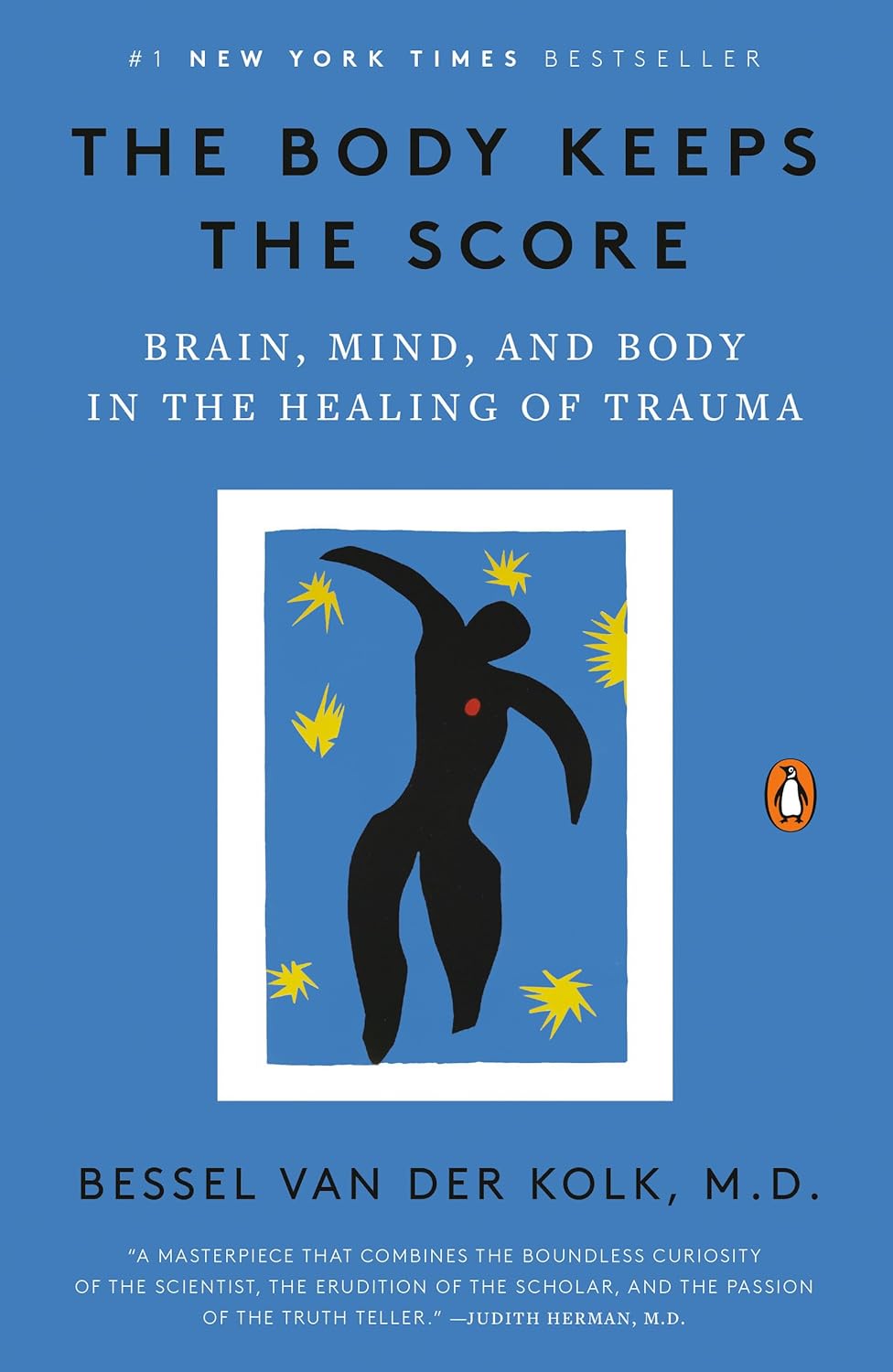
BOOK #1: The Body Keeps the Score
By: Bessel van der Kolk ⭐⭐⭐⭐⭐
Read More
You know that tightness in your chest when you try to write about your father. Your body is holding what your mind filed away. Van der Kolk wrote the book that explains why. The body kept the score. The memoir is where you read it back.
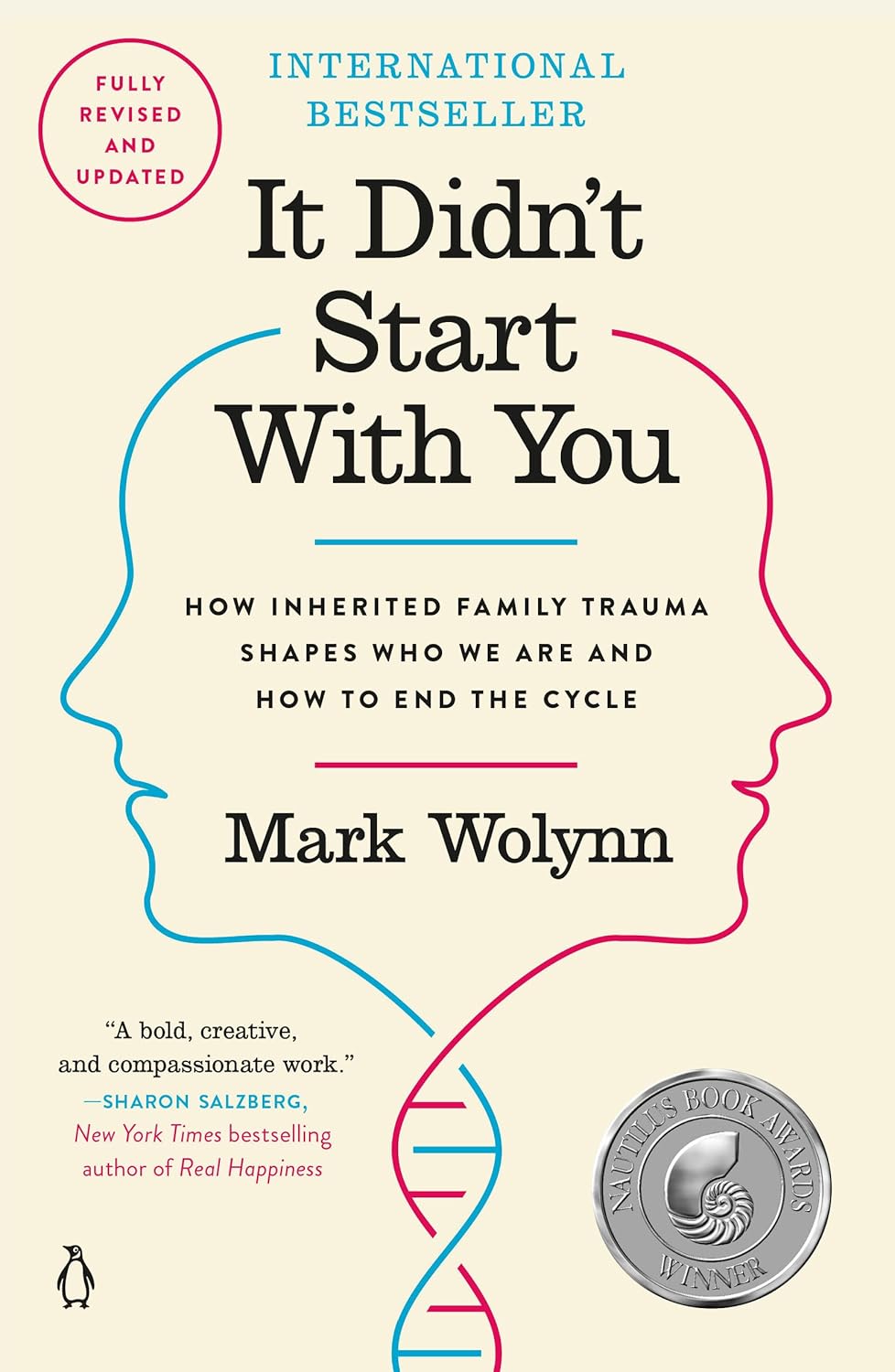
Your grandmother said it once at the dinner table: we do not talk about that. That silence traveled through your mother and landed in your chest as a tightness you could not name. Wolynn traces how pain moves through generations and lands in your body as patterns you cannot explain. For memoir writers, this book answers the question at the deepest level: whose film is this?
PRODUCT #1: Isotonix Digestive Enzymes with Probiotics
Read More
Your body is the first thing that responds when you visit a hard chapter. Brain fog, gut tension, the heaviness that arrives before a single word hits the page. These enzymes support the clarity you need to sit with the chapter long enough for the writing to break through.
The older version of you needs rest to show up well for the younger version. Sleep is where the mind processes what the writing stirred up during the day. Magnesium rebuilt my rhythm so the mornings became mine again. The best writing happens when the body is rested and the mind is still
Next Friday another look inside the build. Monday the next chapter of Zero drops on LinkedIn. Chapter 10 is called Temple.
If you are following this journey, you are watching a book get built in real time. And if you are ready to start building your own, the Memoirs to Millions community is where that work happens.
Share This Brief
Help others discover these tools by sharing on your favorite platform:
I've read and listened to over 900+ books. These are the ones worth your time.
Searchable, filterable, and organized so you find your next great read in seconds.